
Sports team building activities people join

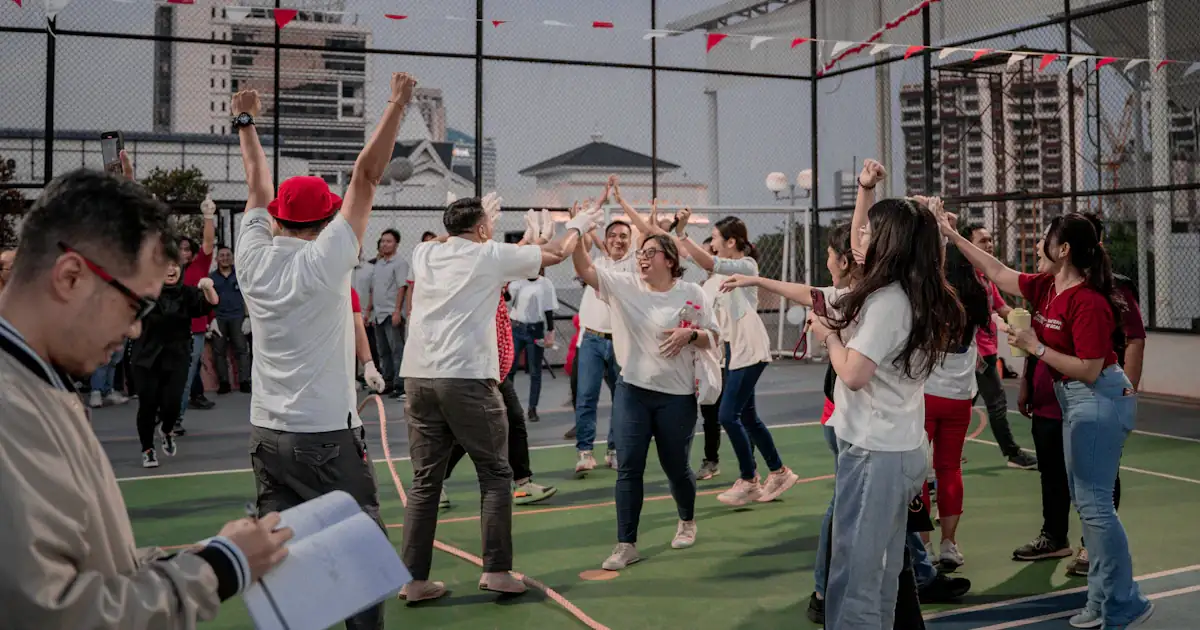
Most sports team building activities fail before anyone picks up a ball, because people don’t come. If you are the one booking the pitch for a company sports day, the work is in making yes easy to say, and the sport comes second.
Start with one team event
Pick a sport and a time, then share one link.
Why sports team building activities fail: nobody wants to be the worst player
In 2017, researchers at Loughborough University interviewed 29 office workers in the UK about playing team sport at work (Brinkley et al., AIMS Public Health). It is a small qualitative study: it can’t tell you how many people feel this way. What they said is quite consistent, though.
The people who stayed away lacked confidence in their ability, or remembered sport as something that happened to them at school. Some had met competition that turned into criticism. Others simply had no time, between childcare and the clock. And one participant described the quiet cost of showing up: “you’re seen as not working by your peers.”
None of that is about the sport. A company that books a football afternoon and sends one email has solved the pitch and left every one of those barriers in place.
Why nobody organizes it on their own
Ask a team if they would like to play something together and most will say yes. Then nothing happens, because someone has to find the court, count the replies and chase the ones who answered “maybe”. That someone is rarely in the job description.
The appetite seems to be there. In Wellhub’s 2026 survey of more than 5,000 employees, 83% said they were more likely to join a wellness initiative with a team or community component (Wellhub). Wellhub sells corporate wellness subscriptions, so read it as a hint. What changes participation is sponsorship: in its 2024 survey of more than 2,000 HR leaders, participation in wellbeing programs was 44% where C-suite engagement was below 30%, and 80% where it was above 70% (Wellhub). That covers wellbeing programs in general, not team sport.
Our reading: nobody is against it, it is nobody’s job, and the first person to suggest it risks booking a pitch for seven people instead of ten.
Team building sports: pick one nobody has to be good at
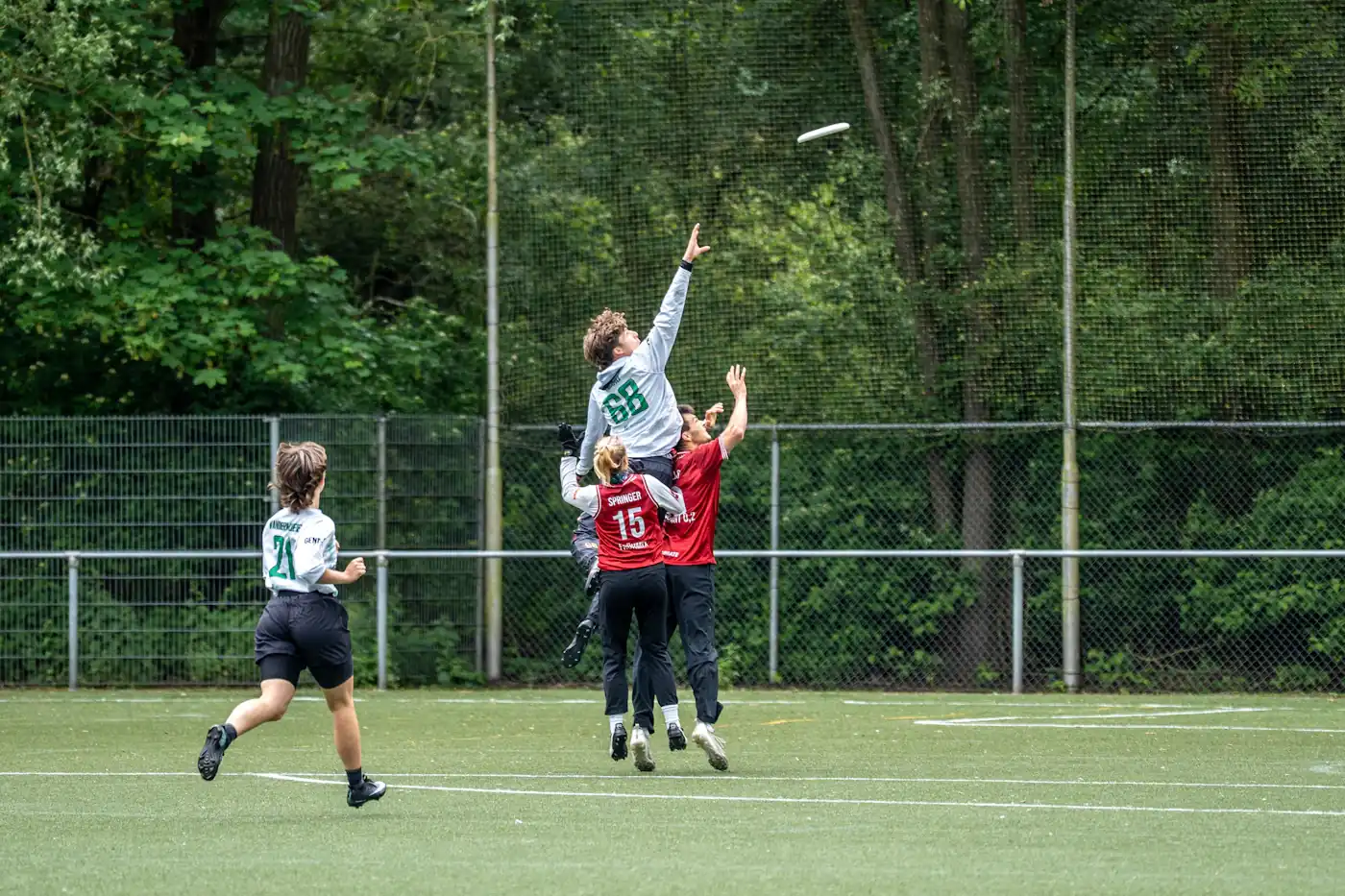
The same study found that adapted rules and unfamiliar sports helped people feel on equal terms. Healthy competition and the feeling of being reasonably good at it were what got people playing.
So the sport matters in one way: how big the gap between the best and the worst player will be on the day. A football match between people who played at club level and people who haven’t run since school will be two different afternoons on one pitch. Pickleball or ultimate, which most of an office has never touched, start everyone near the same level. That is our suggestion, not a finding of the study, but it follows from it.
Mix the teams yourself. Left alone, people sort themselves by department and by level, and the shy ones end up last. Fixing the teams in advance costs you ten minutes and takes the picking-sides moment off the table.
Make team bonding optional, and say so
One survey of 1,000 office workers found that team bonding was 3.6 times more likely to be enjoyed when it was optional (Nulab). The respondents came from an online panel, the figures are self-reported and the authors say they were not tested statistically. We wouldn’t quote the 3.6 in a board meeting. The direction fits what the interviews above describe, so we would still act on it.
Sports team bonding activities are no exception. In practice, optional means a real alternative. Someone who doesn’t want to play can keep score, referee or bring the drinks, and still be part of the afternoon. An invitation that says “attendance is expected” makes it a different event.
Planning a company sports day: time, place and who counts
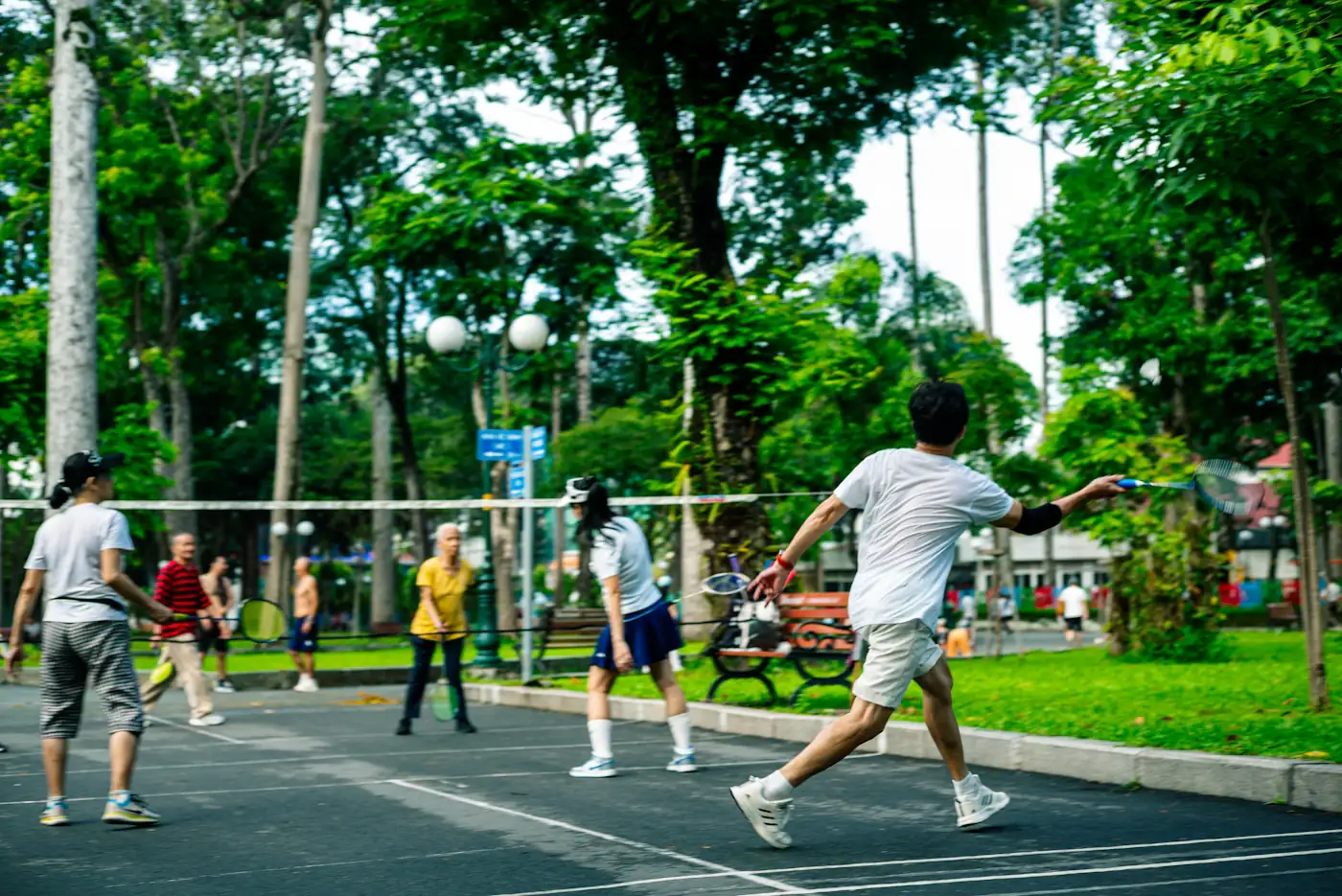
Hold it during work hours. If it happens after work, you are asking people to give up their evening for the company, and the ones with children or a long commute stay home. The study above lists work-life pressure as a barrier of its own.
Funding comes up as well. In a 2024 French barometer by Harmonie Mutuelle and A.S.O., run with the CSA institute, 63% of company leaders named lack of funding as the main brake on offering sport (Harmonie Mutuelle). The survey does not say what the budget was for. Many team sports need only a free slot at a public court or park.
Then there is the headcount. Every sport has a minimum: padel needs four, five-a-side football needs ten. The number of replies a week before is worth more than any plan you wrote.
Corporate team building: where a big company gains the most
The larger the company, the less people meet by accident. Among 61,182 Microsoft employees in the US, the move to remote work made the collaboration network more siloed, and time spent with contacts outside one’s own group fell by about a quarter (Yang et al., Nature Human Behaviour, 2021). That is about remote work, not sport, but contact shrinks to your own team quickly once nothing forces the mixing.
Wellhub’s 2026 survey reports that 56% of employees feel highly connected to colleagues during shared wellness activities (Wellhub). Again a vendor survey, and we found no study showing sport links departments better than another shared activity. The practical point stands: a team drawn across departments gives people from finance and logistics an hour of shared effort, which is why mixing matters more as the company grows.
What to expect from it
A meta-analysis of 60 correlations found team building to have a positive, moderate effect on teams, strongest on how people feel about each other and on how the team works day to day (Klein et al., Small Group Research, 2009). It looked at four types of intervention: goal setting, interpersonal relations, problem solving and role clarification. A sports afternoon sits mostly in the second.
For sport specifically, the evidence is thinner. A 12-week trial put 28 people through one lunchtime team sport session a week in one office and compared them with 20 colleagues in another (Brinkley et al., Sports Medicine - Open, 2017). Communication within teams rose by 3%, and the control group’s fell. Group cohesion, team performance, job satisfaction and engagement did not change in a way the authors could call significant. Nobody was randomly assigned and the two groups differed at the start, so read it as a hint.
The most quoted productivity numbers come from Wellhub. In its 2024 report, 99% of HR leaders said wellness programs increase productivity and 98% said they reduce turnover (Wellhub, 2024). These are opinions from an online survey run by a company that sells such programs, and they cover wellness benefits as a whole, not team sport.
Controlled research is more cautious. A 2025 meta-analysis of 80 randomized trials found small to moderate positive effects of workplace physical activity programs, including on organizational outcomes (g = 0.30 across 30 studies), and better adherence in group formats (Konradt et al., Journal of Occupational Health Psychology, 2025). So there is an effect, smaller than the vendors suggest, and playing together helps people keep showing up. We found no study showing that sports team building keeps people at a company longer. One afternoon will not change a team. A weekly one, as in the trial, is at least what has been measured.
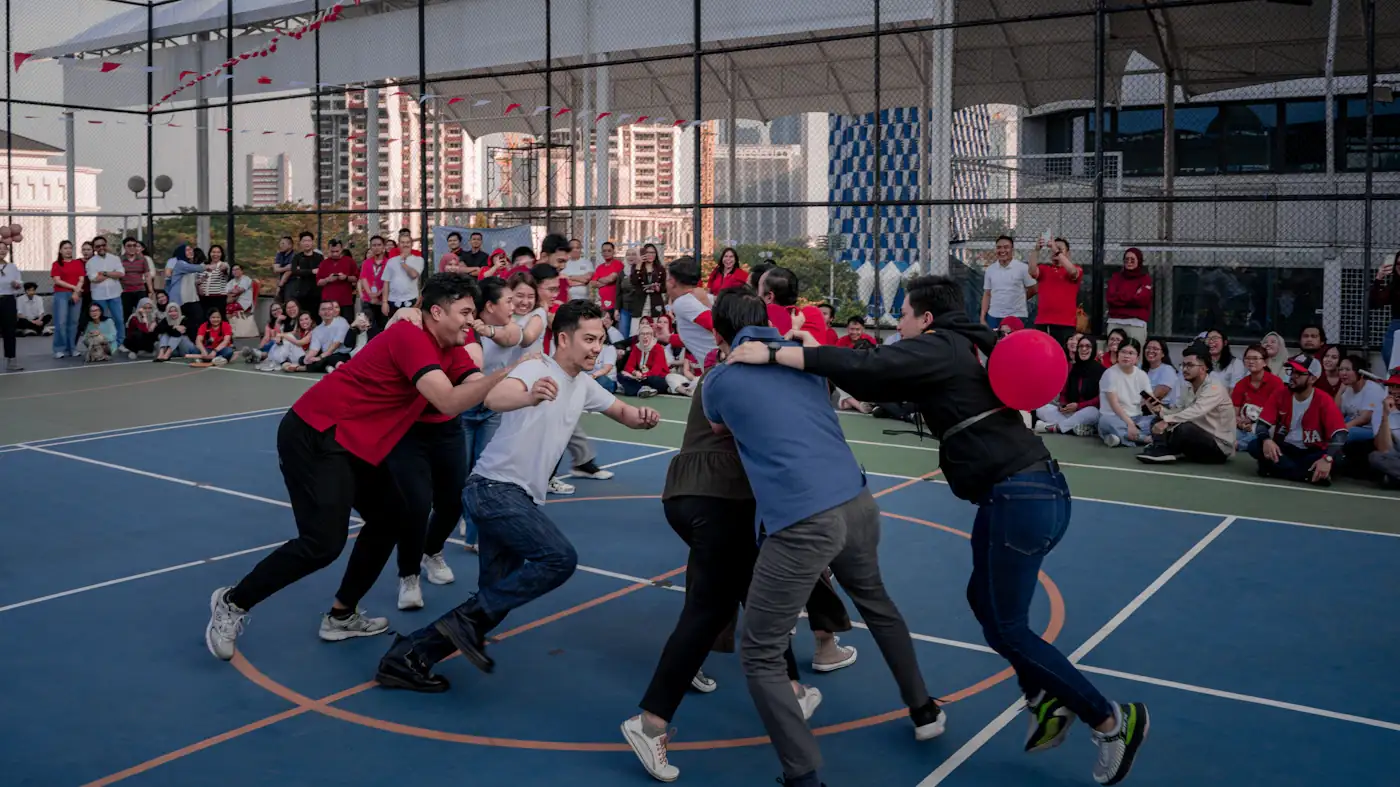
Running it with FitHere
On FitHere you host an event by picking a sport, a day and a time. You share one link, and people reply from their phone. You see who said yes, who is on the waitlist, and you get an alert when the headcount falls below the minimum you set. It is free for you and for the people who join.
If the afternoon works, you can keep the same people together as a community and schedule the next one without starting over.
Ready to pick a sport?
Set a time, share the link, count the yes.
Common questions
How long should a sports team building afternoon last?
Two hours covers a warm-up, a few short games and time to talk afterwards.
What are good team bonding activities for sports?
Ones where nobody has a head start: pickleball, ultimate, relay games. Choose by how small the gap between the best and the worst player will be.
What if some of the team can’t play?
Give them a role: scorekeeping, refereeing, timing. A role doesn’t depend on fitness.
Should the manager play?
Yes, and early. If the manager is on the pitch, taking part stops being a verdict on how hard you work.
Does it work for remote or hybrid teams?
Only if people can be in the same place. Pick the day most of them are in the office.